
Here's Why You Shouldn't Drink Distilled Water
The year 2024 is coming to a close, and the United State’s economic climate is only getting worse. The U.S has been in a trade deficit for well over a decade now due to the nation’s GDP. The deficit has made food and beverages absurdly expensive, and not only are prices sky-high, but it’s getting harder to find high quality products that are good for you.
In recent years it has become obvious that big brand companies have not, and will never, acknowledge the declining quality of their products that are caused by marking up prices to sustain themselves. Another group of big brand companies that have joined the entourage of company capitalists is distilled water brands.
Distilled water companies, covertly, do not hold up to their well-advertised reputation. These water bottle companies release subpar and health-hazardous products to raise profit margins, and in that process, leave consumers oblivious to their wrongdoings.
I used to be a distilled water drinker. By the bottle it was cheap enough for my frail, thin wallet; it was readily available everywhere I went, and my health-conscious brain would persuade me with the notion that, ‘it’s just water; it can’t be detrimental to my health.' When I discovered the reality of what goes into processing and producing water from distilling brands all of my preconceived notions about the okay-ness of most bottled water were shattered.
For people or families who are budgeting, or living paycheck to paycheck, distilled water might seem like the only option because it is so very cheap. For people or families living in communities that have intentional systematic disparities, poor quality tap water is all too common, and distilled water might feel safer than filtering the tap. But it’s important to share the lesser known- and better- options out there. There are other choices that won’t leave your wallet bare and empty, and these options strengthen your physical well being too.
Maybe I'm jumping the gun a little. Before I sell you my spiel, let me explain something important: the differences between water types and their processes. Distillation is a process of vaporizing water in a location away from where it was sourced, and then condensing it back into a liquid. This, like filtered water, partly removes contaminants and minerals. It still isn’t all that safe though.
The World Health Organization states, “ [Distilled Water has] Inorganics, salts and high molecular weight natural organics are non volatile and thus easily separated, however there are circumstances where volatile petroleum chemicals are present due to spills and other source water contamination”. Some contaminants and pollutants have higher boiling points than what is reached with the distillation process. Arsenic and lead are common impurities that may remain in the water post-distillation.
So what's the solution then? It's simpler than you think: just switch to spring water. Spring water is a type of water that does not have any external process applied. The water is naturally filtered underground. Spring water technically can face some of the same challenges as tap because spring water is exposed to its natural environment and whatever is in it. To avoid this, spring water production has strict FDA regulations and restrictions which require production to be x miles away from possible sources of contamination- sewage systems, factories, etc. It provides the safest, cleanest, and least processed product of water and, in short, it's the one to place your bets on.
Spring water is pure; there's no additives. Distillate water brands, on the other hand, usually re-add minerals back into their distilled water. These minerals are potassium chloride, magnesium sulfate, and sodium bicarbonate. According to distilled water company websites these are added for taste. All three variations of chemical compounds are complicated scientific names for types of salt. Parallel to this is the epidemic of over-salting in American foods and drinks- we don't need more salt. With some critical thinking it becomes evident that these minerals are added because salt makes you thirstier in acute intake.
So, if that first bottle didn’t quench your thirst- and it scientifically won’t- then you're more likely to buy another bottle. This circles back to that thing that we talked about earlier- about how corporate capitalists are trying to squeeze money out of consumers pockets, and are doing so against better judgements.
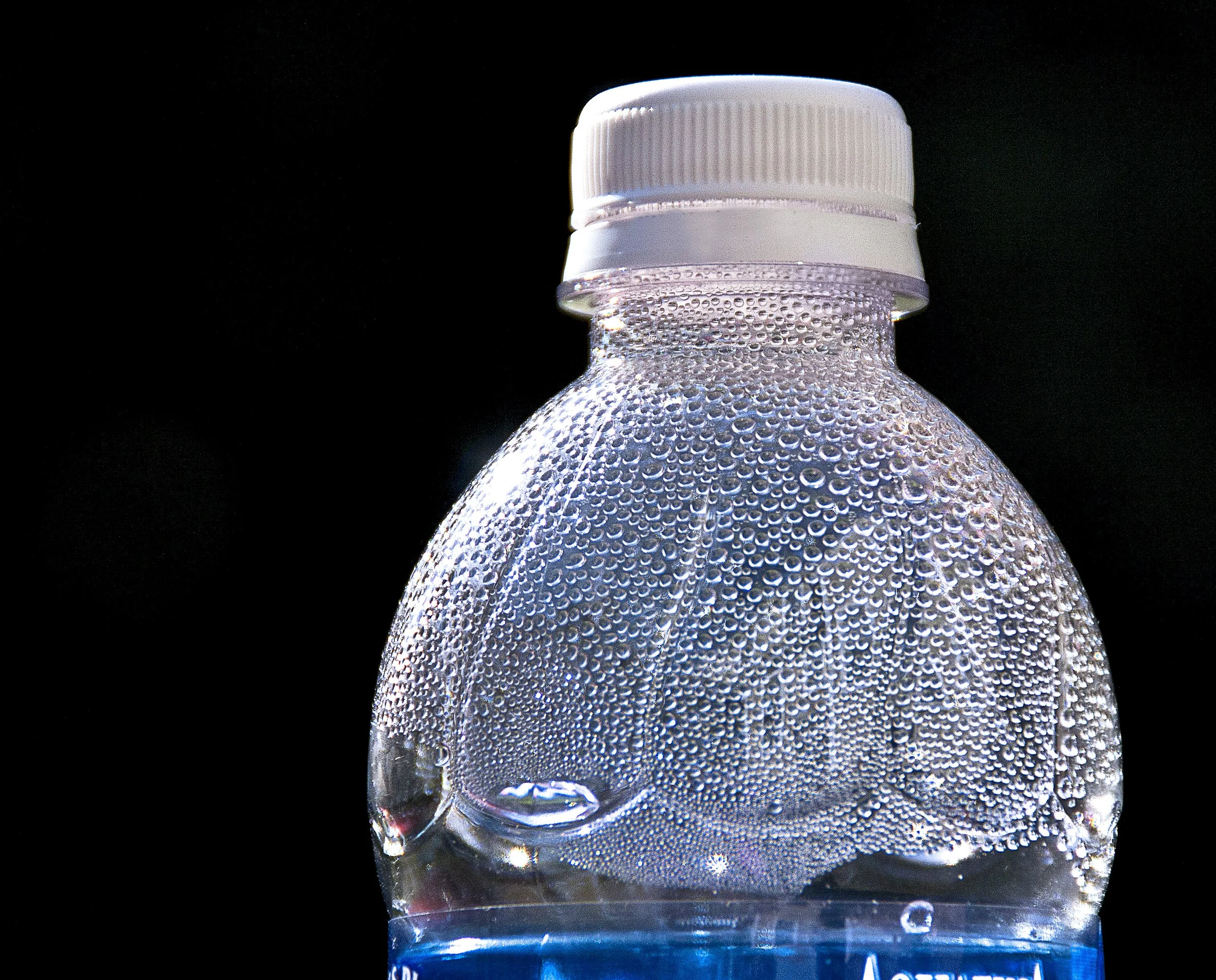
Photo Credit: "Water Bottle" by Muffet is licensed under CC BY 2.0.
Yes, there are scientifically proven physical detriments to drinking distillate water. But I’m sure learning about these detriments was hurtful in other ways. The realization that the most trusted, most promoted, most publicized and most available products of water is secretly undermining your needs by focusing on their fiscal gains is akin to psychological warfare.
We want to choose what’s best for us and what is best for our family. Lacking information and agency hurts; being given no choice but a bad one is frustrating, demoralizing, demeaning, disrespectful- a real slap to the face. As Americans, as people from a country built on the notion of democracy and individual choice, agency really does matter to us. We, as a nation, do care about lacking agency, and we tend to fight against authoritarian-like control. In fact, individualism and freedom is the basis of our identities as Americans.
But physical and mental strife might not be where your head's at. You may very well care about your health, and try to do your best to maintain it despite modern day hurdles. You might be able to tolerate feeling no agency in choosing products because that’s just the way it is.
The most pressing factor that influences people’s consuming choices is plain and simple: money. When you think of spring water you might imagine a person who has it all- white picket fence, a well-groomed golden retriever; the whole ordeal. ‘I only drink Evian! Fresh, French spring water. On occasion, sparkling. Oh, I beg, thy can not mention tap water, lest I faint!’ It’s unfortunate that the U.S has turned the image of health-consciousness in consuming products into an image of luxury and only fit for the ultra wealthy.
Yes, most spring water by bottle can be expensive, and sometimes more suited for heavier pocketed people. Though spring water is the definition of affordable when buying in bulk. Another thing to note is that, unless you're buying water from Fiji or France, most spring water that is sourced in the U.S is pretty cheap. Here are a few recommendations:
A five gallon jug of mountain spring water by Ice Mountain is only $9.49 online. Most brands of one gallon spring water jugs are around $2.00. Not too bad, and worth the dollar splurge. Ice Mountain is really an upstanding brand- It’s owned by BlueTriton Brands. It used to be a subsidiary of Nestle, but as of the last three years they are independently owned, making them one of the companies that really put up a fight against corporate America. They even have cheap single bottles at most convenience stores. Poland Springs, and LifeWTR are a few other trustworthy brands you could check out.
I’m not here to try and convince you of an end-all-be-all solution that sucks the joy out of life, and only makes your every day more arduous. Just switch up your water brand. To negate the unavoidable health hazards of everything else is impossible, but drinking spring water definitely won’t hurt. And hopefully it has been clarified that making the switch doesn’t have to cripple your wallet either.
But most importantly is the meaning behind the change. Drinking spring water isn’t just better for you, but it’s ‘sticking it to the man’. Grabbing a gallon of Ice Mountain is akin to blasting Pink Floyd's Another Brick in The Wall Pt. 2 way back when you where walking into your high school calculus class; to put it simply, buying spring water is having a sense of agency over your choices in a world that constantly rips that away from you.